
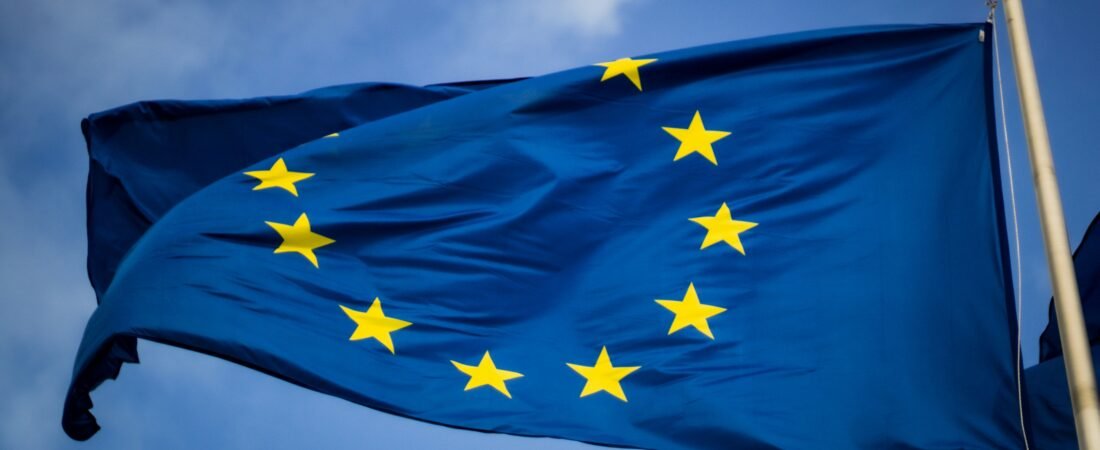
Liberal Prime Minister Mark Carney addressed the European Parliament to pitch the deepening of relations between Canada and Europe into an “Alliance of the future”1. He Highlighted the shared values of democracy, individual freedom, and the rule of law as key pillars of both European and Canadian society, and the shared history of both societies by reminding the Europeans of Canada’s role in World War 1. This speech came right after the president of the European commission, Ursula von der Leyen called on Canada to become the first ever ‘associate member’ of the EU. This is a position which does not yet exist, nor one embraced by the Canadian government. There is some uncertainty on the specifics of this new cooperation, however there is no doubt that Canada is moving at incredible speed toward deeper relations with Europe.
One of the central aspects of the Liberal election campaign under Mark Carney, was to build resilience against economic and political pressure from the United States through a diversification of Canada’s trade partners. Following the Liberal Party’s election victory, the government has secured what they call “20 new economic and security agreements across 5 continents”2. This includes economic deals to drop tariffs, Memorandums of Understanding (MOUs), and other investment pledges with countries mainly in the Asia-Pacific region, but also in Europe and the Middle East (Qatar & the United Arab Emirates).
Mark Carney went on to make a monumental speech at the World Economic Forum in Davos that made headlines around the world, declaring a rupture in the world trade system. He put forth a new thesis in international relations: a conception of a world lead by both ‘Great Powers’ and ‘Middle Powers’ in which the Middle Powers (such as Canada) must band together in order to resist the overwhelming influence of the Great Powers (such as China and the United States). This relationship between middle powers & Canada is being built through a series of bilateral ties currently touted by the Liberal Government, however some effort to move beyond bilateralism is showing in the Prime Ministers overall strategy.
Cooperation with Europe, and bilateral ties in the Asia-Pacific region are not two separate moves, but rather part of a larger strategy to concretize Mark Carney’s proposed alliance of ‘Middle Powers’. In November of 2025 (before the Davos speech) Carney met with the President of the European Commission, Ursula von der Leyen, and the Prime Minister of Vietnam, Phạm Minh Chính, while they were in South Africa for the G20 Leaders’ Summit. According to the Prime Minister’s Office:
Prime Minister Carney discussed the need for greater integration and cooperation between the Comprehensive and Progressive Trans-Pacific Partnership (CPTPP) and the European Union (EU) and underscored the transformative economic benefits it could catalyse. Linking two of the world’s largest trading blocs – representing over 1 billion consumers – would strengthen supply chains, expand trade, and catalyse investment across the Indo-Pacific and Europe, with direct gains for Canadian workers and businesses.
The leaders discussed what would be required to achieve a structured agreement that deepens economic CPTPP-EU cooperation and increases trade. Working with Vietnam during its 2026 CPTPP Presidency, Canada will advocate for collective progress on key issues, including digital trade, investment facilitation, and critical minerals.3
Fast forward, and a week after his address to Europe, the Prime minister hosted Vietnamese President To Lam to Canada for the first time, and the two leaders announced that their diplomatic ties had been upgraded to the level of “Strategic Partners”4. Vietnam is a member of ASEAN – A bloc of southeast nations that deepened trade ties to build resiliency and have often had disputes with their massive neighour China over issues such as territorial claim over the South China Sea. ASEAN serves as a way to build resilience in the face of what many in the region view as an overbearing Chinese trade policy. It is no surprise then that Carney views Vietnam as a natural member of his ‘Middle Powers’ thesis.
This new addition to Canada’s existing partnerships with other Asia-Pacific nations shows progress in Carney’s efforts to build a concrete economic and diplomatic framework of cooperation and integration between the Middle Powers of the world by building a bridge between the Asia-Pacific and Europe – with Canada at the centre. This was said explicitly by Carney in February of 2026 when he pitched a deepening of trade between the nations of the Comprehensive and Progressive Agreement for Trans-Pacific Partnership and the European Union.5 This will progress even further with Canada’s free trade negotiations with ASEAN, and coming visit to the Philippines, however it still remains to be seen what the actual structure of this new economic framework will be.
Carney is wise to understand that mere bilateral ties with countries other than the United States does not constitute a comprehensive trade diversification strategy from Washington. The success of the post war globalization of international trade rested on a common framework between all nations within it, especially after the fall of the Soviet Union’s Socialist Bloc of Countries. The Washington consensus flourished due to the existence of a single economic, political, and diplomatic framework provided by international institutions such as the World Bank, International Monetary Foundation (IMF), and The United Nations. Without a unifying framework beyond bilateralism, international trade remains unpredictable, and vulnerable to the political machinations of great powers such as protectionism, or even military conflict.
The Issue of the Washington consensus was that it relied on the benevolence of the world’s largest great power, the United States. The US dollar was used as the currency of international trade, and therefore became the world’s reserve currency. International law was enforced with economic sanctions that weaponized this position of the US Dollar, and the overwhelming might of the US Military was used against nations that did not conform with the principles of the Washington Consensus such as Libya and Yugoslavia.
A new framework of international relations, diplomacy, and commerce would need similar levers of power to ensure enforcement and stability. It would also require a certain degree of shared characteristics of its members, for example the Soviet international Bloc was comprised of socialist nations with similar internal political systems and ideological approaches to international relations on the basis of Marxist anti-imperialism. The Capitalist Bloc was comprised of countries that valued the free movement of capital, and market-based internal economies. Carney’s alliance of middle powers however would be comprised of Liberal democracies, Monarchies, and a few socialist one-party states.
If Carney is hoping to create an entirely new international framework through which Middle Powers can secure the stability and predictability required for international commerce to flourish, he should study the current trajectory of the current rival to the Washington consensus – BRICS. The economic alliance is founded as a counterweight to the American/ western lead international order, and has achieved a great deal in the realm of financial mechanisms that circumvent enforcement mechanisms of tariffs, sanctions, and exclusion (such as the exclusion of Russia from the SWIFT banking transfer system). BRICS has done this by moving beyond bilateralism, however it still struggles due to the absence of a single unifying ideology other than a desire for multipolarity in international relations.
Another roadblock for Carney’s new international framework is the fact that it depends so much on the European Union’s break from American leadership. Right now, the leaders of the main European nations are on board with a diversification away from the United States, however this could change. Many European states are seeing a surge in popularity for right wing parties which are both modelled after Donald Trump’s political strategy and have largely positive opinions of the President of the United States that Carney is positioning himself as a counter to. If the internal direction of Europe shifts away from a commitment to the liberal international order than Carney represents, and instead pivots towards Trump, then the new ‘Middle Powers’ Bloc could be dead on arrival.
The ruling party of Germany, the Christian Democratic Union (CDU) is rapidly losing popularity, with its leader Friedrich Merz sitting at 14% nationally.6 The far-right wing party Alternative for Germany (AFD) is surging in the polls, has shaken Germany by winning the state election in Saxony-Anhalt. The party has positioned itself as the anti-immigration party similar to Trump (and has received praise directly from the American President), and is against the sanctions on Russian oil that create the energy demand in Europe that Carney is positioning Canada to fill.
In France, the centrist President Emmanuel Macron has a dismal approval rating of 19%, with the far-right wing National Rally (RN) currently leading the polls by a comfortable margin7 ahead of the presidential election slated for 2027.
Similarly, the Spanish leader Pedro Sanchez – arguably Trump’s loudest critic in Spain – is facing difficulty internally as he struggles to maintain support ahead of a 2026 national election that could see the conservative People’s Party winning the election with support from potential kingmaker far-right party Vox. It seems that Trump style politics are gaining ground in Europe.
It is not guaranteed that far-right parties in Europe would necessarily follow Trump’s lead, as their base would demand national interests above all outside countries including Trump’s United States. However, the strength of a middle powers coalition built on preserving some aspect of the liberal international order would be seriously undermined by a Europe which is more inclined towards Trump’s political outlook which favours protectionism and disrespect for international law.
The only way Carney’s gamble on Europe will pay off is if he is able to position Canada within an alliance of countries that all fill each other’s gaps economically. Europe has a dire need of resources that Canada can provide, but only with significant investment. And both Europe and Canada need the Asian-pacific markets to trade finished goods with, import agricultural products, and access low-cost labour markets. If the middle powers bloc economically integrates supply chains in a way that is mutually beneficial, and prevents any one power from having the same leverage that the United States has within the Washington consensus model, then Carney’s new alliance may survive the rise of European populism, and America’s pressure.
References
- https://www.europarl.europa.eu/news/en/press-room/20260911IPR47460/mark-carney-calls-for-an-alliance-for-the-future-between-the-eu-and-canada ↩︎
- Liberal Party of Canada (@liberal_party), “20 new economic and security agreements across 5 continents. That’s how we’re delivering on our plan to diversify our trade abroad and build a stronger economy at home.” X (formerly Twitter). September 12, 2026. https://x.com/liberal_party/status/2098781429312229450 ↩︎
- https://www.pm.gc.ca/en/news/readouts/2025/11/22/prime-minister-carney-meets-president-european-commission-ursula-von-der ↩︎
- https://www.theglobeandmail.com/canada/article-vietnam-upgrades-canada-to-strategic-partner-during-state-visit ↩︎
- https://www.politico.eu/article/mark-carney-trade-alliance-canada-eu-cptpp ↩︎
- https://www.reuters.com/world/europe/merzs-fate-balance-second-eastern-german-state-goes-polls-2026-09-16 ↩︎
- https://www.politico.eu/europe-poll-of-polls/france ↩︎